Fiction
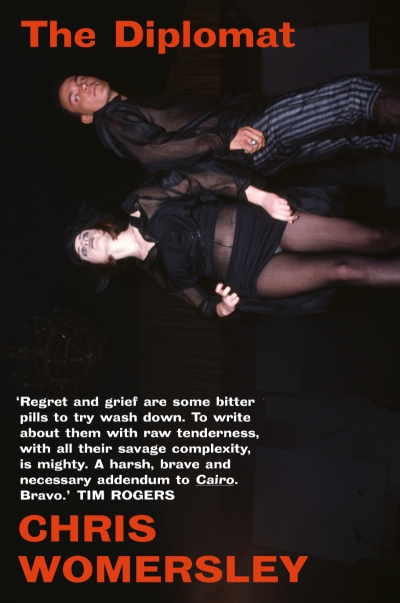
In Chris Womersley’s novel Cairo (2013), a middle-aged man looks back as his seventeen-year-old self is caught up in the notorious theft of Pablo Picasso’s Weeping Woman from the National Gallery of Victoria by a group of bohemian artists. The heist-Bildungsroman combination is energetic, and decades of distance give Tom Button’s narration a lush, nostalgic quality. His sifted memories of 1986 fall gently, landing somewhere between regret and sustained desire.
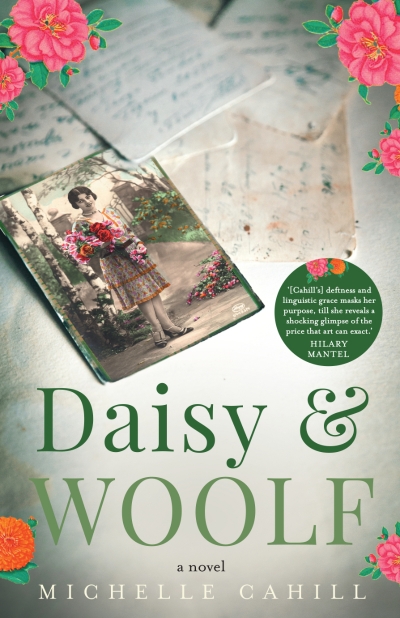
... (read more)Daisy Simmons – twenty-four years old, the wife of a major in the Indian Army, mother of two children, ‘dark [and] adorably pretty’ – is an ephemeral presence in Virginia Woolf’s fourth novel, Mrs Dalloway (1925). Clarissa Dalloway’s former lover, Peter Walsh, has travelled to London from India to secure a divorce so that he might marry Daisy. From a mere handful of references, we are able to glean the wavering nature of Peter’s devotion to Daisy and his suspicion that she will, as Woolf writes, ‘look ordinary beside Clarissa’.
... (read more)The Burnished Sun (UQP, $29.99 pb, 288 pp) by Mirandi Riwoe, Danged Black Thing (Transit Lounge, $29.99 pb, 240 pp) by Eugen Bacon, and Sadvertising (Vintage, $32.99 pb, 298 pp) by Ennis Ćehić are powerful, inventive, and self-assured short story collections that traverse fractured and contested ground through their often displaced and alienated narrators.
... (read more)At the beginning of 100 Essays I Don’t Have Time to Write (2014), author, mother, and playwright Sarah Ruhl notes: ‘At the end of the day, writing has very little to do with writing, and much to do with life. And life, by definition, is not an intrusion.’ Ceridwen Dovey and Eliza Bell’s Mothertongues embraces, embodies even, this collapse of the boundaries between living and writing. Rather than extolling the proverbial ‘room of her own’, Bell and Dovey are asking us to heed the kinds of knowledge that come from being embedded in the everyday.
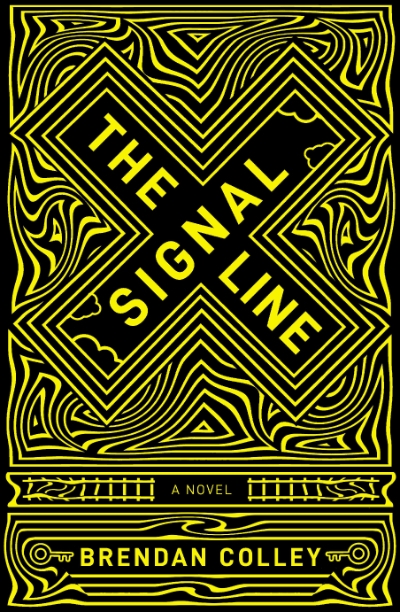
... (read more)Winner of the University of Tasmania Prize for best new unpublished work in the 2019 Tasmanian Premier’s Literary Prizes, The Signal Line is Brendan Colley’s first book. As it happens, my review copy arrived just as I launched into Rhett Davis’s Hovering (2022). Although fundamentally different, both novels open with a fraught return to a family home and a resident resentful sibling. Both protagonists have built a new life in Europe, but where Hovering suggests the possible remaking of the old house into some version of home, The Signal Line seeks to relinquish it.
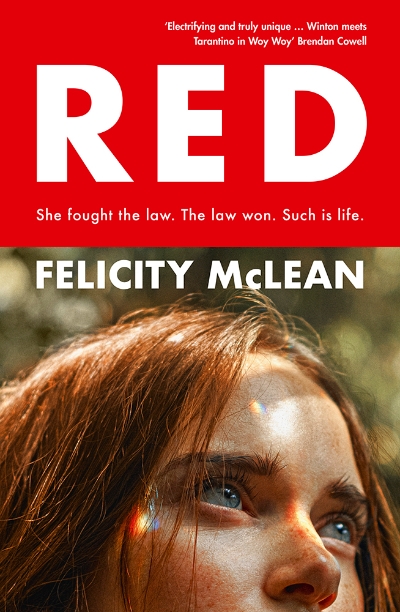
... (read more)‘Everyone knows how it ends,’ declares Ruby ‘Red’ McCoy, the fourteen-year-old narrator of Felicity McLean’s second novel, Red. ‘What people are less interested in hearing is how it all got started.’ The ending in question is Ruby’s attempted murder of a police officer, a crime that is heralded from the novel’s outset. In this retelling of the Ned Kelly legend, McLean sets Red apart from existing depictions of the bushranger – from Sidney Nolan’s iconic series of paintings (1946–47) to Peter Carey’s novel True History of the Kelly Gang (2000) and its subsequent punk-infused 2019 film adaptation by Justin Kurzel.
... (read more)What happens when we die? Human curiosity about the afterlife has inspired countless artists and storytellers from the earliest myths through to Dante and Boccaccio. More recently we’ve had Alice Sebold’s The Lovely Bones (2002) and George Saunders’ Lincoln in the Bardo (2017), as well as sitcoms like Netflix’s philosophical The Good Place and Amazon’s capitalist dystopia Upload, and now Steve Toltz’s alternately bleak and bonkers take in Here Goes Nothing.
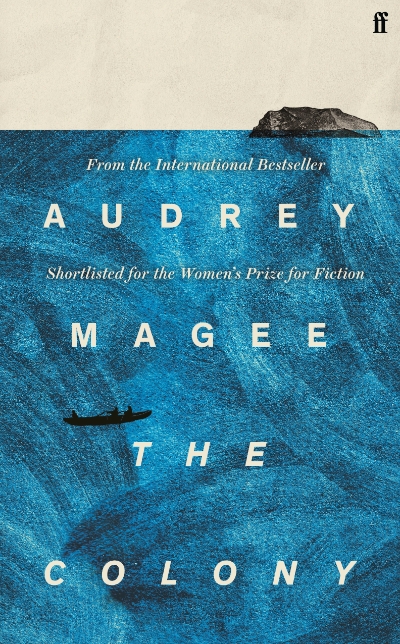
... (read more)Two new novels probe national myths and histories, offering insights into the political and religious forces that continue to shape contemporary conflicts. Set during the height of the Troubles, Irish writer Audrey Magee’s The Colony begins with English artist Mr Lloyd travelling to a remote island off Ireland’s west coast, ‘a rock cutting into the ocean, splitting, splintering, shredding the water’. Lloyd insists on being ferried across by currach rather than by the motorboat the islanders themselves use when crossing to the mainland, a requirement that immediately foregrounds how much of Lloyd’s conception of the island is bound up in romanticised notions of the bleak Irish landscape and the hardy individuals – twelve families in all – who inhabit it.
... (read more)Like the Booker-winning Shuggie Bain (2020), Douglas Stuart’s second novel is set in the post-Thatcher, post-industrial, working-class Glasgow housing schemes dominated by unemployment and dysfunctional families. Both novels are populated with alcoholic mothers and violent or absent fathers whose neglected children are forever vulnerable to abuse and hardship. Their titular protagonists must fit into their environment if they want to survive, but neither possesses that talent.
... (read more)In the years since Les Murray’s The Boys Who Stole the Funeral (1980) and Alan Wearne’s The Nightmarkets (1986), the verse novel has become, despite its inherent difficulties, an established literary form in Australian poetry (and fiction, for that matter). Verse novelist Dorothy Porter (1954–2008), with The Monkey’s Mask (1994) and other works, gave it further prominence. Steven Herrick is just one of the poets who are making it an important part of the Young Adult field. A series of interviews with Australasian verse novelists (The Verse Novel), edited by Linda Weste, has recently gone into a second edition.
... (read more)