Memoir
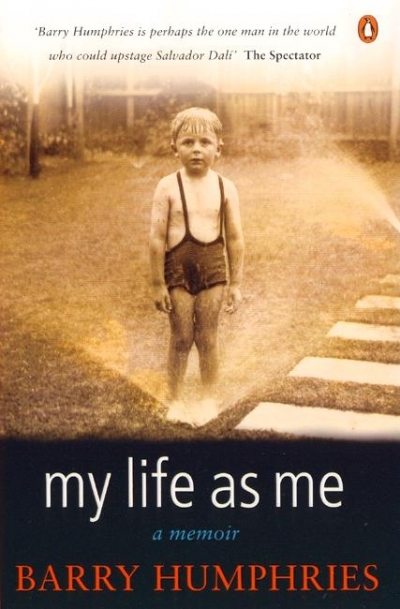
When Barry Humphries published his first volume of autobiography, many readers were left wanting ‘More, please’ – avid as gladdie-waving victims during one of his shows; voracious as the greedy polymath himself ...
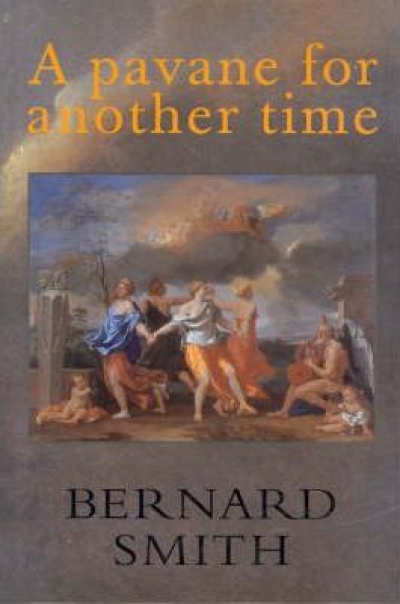
... (read more)It’s a Proustian title, or at any rate a Powellian one, that Bernard Smith has produced for this memoir of his life in the long-ago 1940s, and, yes, there on the cover is Anthony Powell’s hero, Poussin. That’s doubly appropriate because one of the more vivid figures (though also one of the more saturnine ones) in this remembrance of things past is Anthony Blunt, great scholar of Poussin’s work, master spy, eminent director of the Courtauld and critical educator of the Young Bernard.
... (read more)From Eternity to Here: Memoirs of an angry priest by John Hanraham
For those who remember John Hanrahan as an incisive literary critic for The Age, former editor of ABR, and literary commentator on the ABC, this biographical account, published posthumously, will have great poignancy. Hanrahan was a writer who did it the hard way, because of the struggle involved in being a Catholic priest. In kicking against the pricks, he found his voice.
... (read more)The facing island in Jan Bassett’s memoir is Phillip Island, where her maternal grandparents had a dairy farm and where it seems she was most emotionally at home. Summer holidays there as a child in the 1960s, in the midst of her grandmother’s extended family and surrounded by familiar tokens of past decades reaching as far back as the early 1900s, undoubtedly sparked her lifelong commitment to Australian history. The title, taken from Peter Rose’s poem ‘Balnarring Beach’ (‘The facing island, a mortal blue, / beckons, intensifies, vanishes’), could hardly be more appropriate, compressing in a few words much of the emotional intensity of Bassett’s autobiographical last journey.
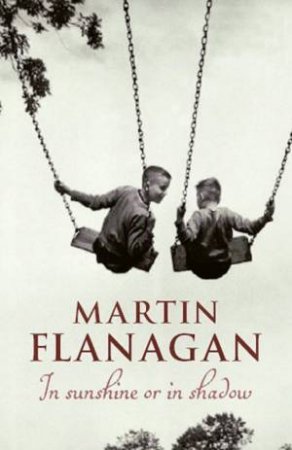
... (read more)In this ‘memoir about going home’, home is where the heart is. The book’s principal locale is the Tasmania of Martin Flanagan’s Irish Catholic small-town childhood. But ‘home’, in this narrative, isn’t just a place: it’s a state of the self. It’s what one gets back to when life’s useless accretions, confusions and hesitations are peeled away, leaving a self that is pristine – attuned to its true origins, its deepest intimations about the world, and to the values that the unadulterated self lives by, Flanagan’s journey is a quest for the authentic self. A ‘romantic’, he wants to embrace the ‘wild green joy of living’ – a phrase that typifies the passionate intensity of his search.
... (read more)Franca by Franca Arena & Speaking for Myself Again by Cheryl Kernot
If Cheryl Kernot writes another book – and if Speaking for Myself Again is anything to go by, you had better hope she doesn’t – her publishers should at the very least make sure the punctuation police do their job. It appears they didn’t even show up to the scene of the accident this time. Exclamation marks are strewn throughout the work. Each time Kernot wants to bitterly labour a point, up pops an exclamation mark, as if she’s hitting the keyboard and cursing, ‘Take that you bastards’. Thus we get: ‘And some people can be so rude!’; ‘Women have sustained me!’; ‘I could write a whole book on my experiences with the media. Perhaps I will!’; and ‘Opinion rules!’ In a teen diary, that’s fine, but not in a book by a former senior federal parliamentarian.
... (read more)The cache of letters or other documents retrieved from the monastery coal scuttle, and affording the basis for a whole new understanding of the fall of princes or the causes of the French Revolution, is the stuff of scholarly fantasy. It is a fantasy exploited by A.S. Byatt in her novel Possession: A Romance (1990), which centres on the quest for letters as the key to understanding a famous author’s life and career. I take Possession as a cautionary tale in approaching the phenomenon represented by the letters of the great Australian novelist Christina Stead (1902–83) and her husband, ‘William Blake, novelist and economist’, in the words of her dedication to him in I’m Dying Laughing (1986). (Born Wilhelm Blech (1894–1968), when this American of German-Russian-Jewish extraction anglicised his name, he immodestly called himself after the visionary Romantic poet.) Having these letters in circulation could offer readers and critics many opportunities, yet I say ‘cautionary’ because they extend and refine interpretations rather than subject them to complete revision. That said, they are extraordinary opportunities.
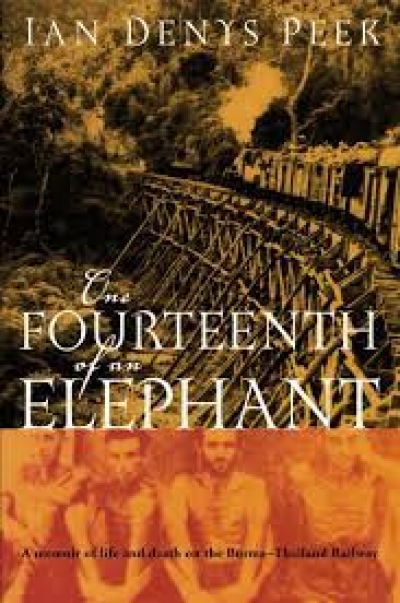
... (read more)Colin McPhedran, the son of a Burmese mother and a Scottish oil company executive father, was living a comfortable middle-class colonial life in Central Burma with his mother, sister and two brothers when the Japanese invaded the country in 1941. He was eleven years old. The invasion spread terror throughout the population, which feared the notorious savagery of the Japanese army. The European and mixed races felt particularly threatened, and Colin’s mother made the fatal decision to flee their comfortable villa and escape to India. The children’s mixed parentage concerned her; she resolved to undertake the journey with her three younger children. She was especially anxious about her fifteen-year-old daughter whose youthful European beauty would, she thought, make her a special target for sexual abuse. Colin’s father did not play any part in this disastrous decision, having escaped to Calcutta when Rangoon fell to the Japanese.
... (read more)At seven o’clock on the morning of 2 February 1999, I was due at the Memorial Hospital in North Adelaide to relieve my older sister at my mother’s bedside, where she had been all night. The alarm was set for six. At five-thirty, I was woken by the phone; my mother had died, as we had known for a couple of days that she would, from complications following a cerebral haemorrhage.
... (read more)It’s the silence. Even by the river, my ears are straining. It’s the silence. At this moment it’s a warmish humid silence with the grass outside lushly mesmerising the eye.
... (read more)