Non Fiction
A Future History of Water by Andrea Ballestero & Anthropogenic Rivers by Jerome Whitington
This June I attended a major Aboriginal fire-management workshop in Barmah National Park on Yorta Yorta woka, or Country. Camping on the floodplain of Dhungala – the Murray River – the participants’ discussions of bushfire led repeatedly back to another elemental force: walla, or water. As several elders explained, the flammability of the surrounding red gum forest is inextricably linked to the industrial regulation of the river’s movements. Anthropogenic infrastructures such as Lake Dartmouth have turned the forest’s wetting regime ‘upside down’, repurposing a millennia-old ecological pattern to capture spring floods and create summer flows. One perverse outcome, as Yorta Yorta man Corey Walker said, is that holidaymakers experience the river as rich in water. When urbanites encounter news reports of plunder in the wider Murray–Darling Basin, the channelling of its vitality into irrigation, they think back to summer breaks and long Invasion Day weekends enjoying a generous current, likely unaware that those flows were a gift from water authorities sending a strategic pulse through the system.
... (read more)
Manual for Survival: A Chernobyl Guide to the Future by Kate Brown
This is a very disturbing book. It’s not just the Chernobyl story, but also Kate Brown’s broader story about the worldwide but inadequately studied impact on public health of lifetime exposure to ‘chronic doses of man-made radiation from medical procedures, nuclear reactors and their accidents, and atomic bombs and their fall-out’. But let’s take Chernobyl first ...
... (read more)If there was any doubt about the need for intelligent writing on sex, international relations, and that current political catch-phrase – globalisation – look no further than last month’s United Nations General Assembly special session on HIV/AIDS. Convened by the Secretary-General, the session ground to a halt as Syria, Egypt, and Malaysia ...
... (read more)Barely a decade ago, Australia was in the middle of much excitement about the Asian Century. Today, those heady days seem a distant memory. A growing number of pundits see the north as troubled by dangerous flashpoints and great power rivalries. On top of that is an America apparently in strategic retreat from the region ...
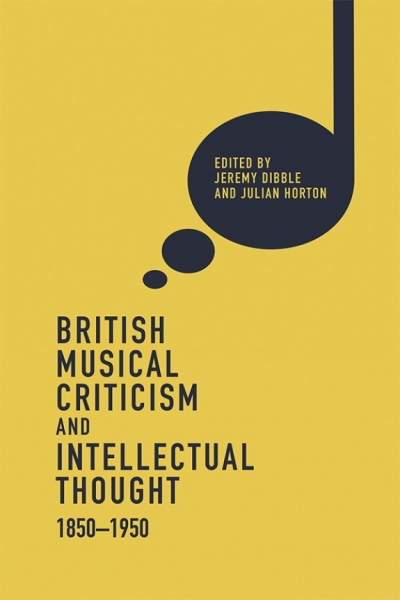
... (read more)British Music Criticism and Intellectual Thought 1850–1950 edited by Jeremy Dibble and Julian Horton
When the German social commentator Oscar A.H. Schmitz described England as ‘Das Land ohne Musik’ [The Country without Music], the insult stuck. Its veracity arose not because the English lacked a vibrant musical culture, or a lively intellectual class prepared to engage with what they were hearing. Rather, it was because Schmitz ...
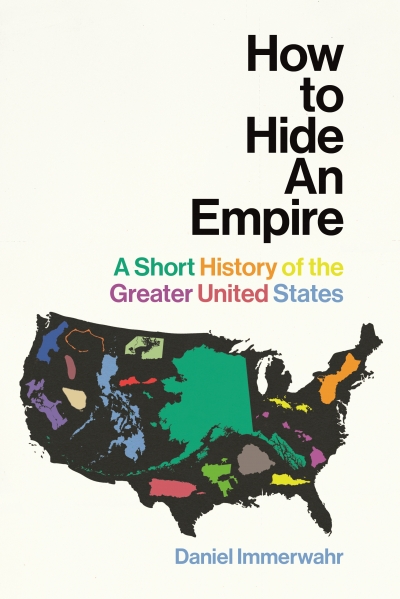
... (read more)How To Hide An Empire: A short history of the greater United States by Daniel Immerwahr
On 7 December 1941, Japan bombed the American naval base at Pearl Harbor. The following day, President Franklin D. Roosevelt declared that it was a date that would ‘live in infamy’. Those who heard his radio broadcast knew that the United States would be drawn into the war that had engulfed Europe and the Middle East ...
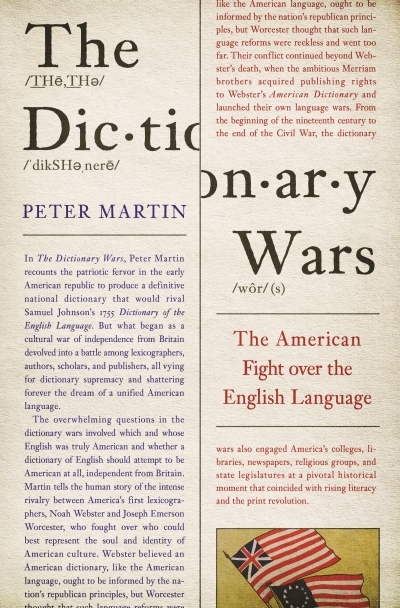
... (read more)The Dictionary Wars: The American fight over the English language by Peter Martin
The title of this book refers to the battle for market dominance between the editors and publishers of two rival dictionaries, the one edited by Noah Webster and the other by Joseph Worcester. This battle took place largely between 1829 and 1864, and it was played out in the newspapers and by means of pamphlet warfare ...
... (read more)The left has an appalling habit of handing over its best ideas to the right. A non-exhaustive list might include: the ideal of common citizenship, anti-tribalism, belief in artistic quality, ribald humour, irony, working-class solidarity, the existence of disinterested truth. Free speech – the rallying cries of radical Berkeley students in the 1960s – is now typ ...
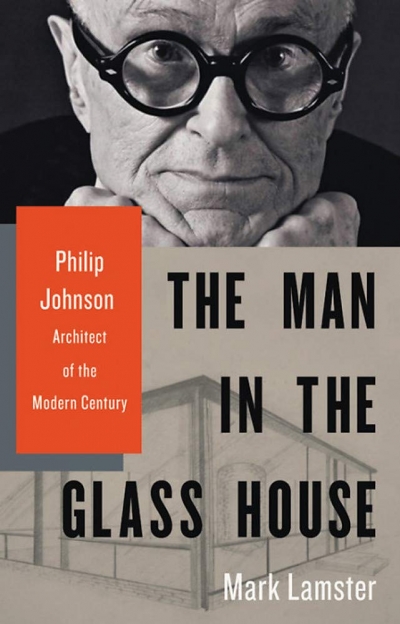
Man in the Glass House: Philip Johnson, architect of the modern century by Mark Lamster
Philip Johnson – lagging well behind the founding fathers – may not be the most profound architect of the twentieth century. Nor does he have the resonance of Louis Kahn or the form-changing genius of Frank Gehry, among his contemporaries. Yet the pattern of twentieth-century architecture cannot be fully understood without him ...
... (read more)Democracy and Dictatorship in Europe: From the Ancien Régime to the present day by Sheri Berman
Democracy won the Cold War. As East Germans breached the Berlin Wall in November 1989 to screams of joy, a young KGB officer watched the concrete crash to the ground. Systematically, he destroyed sensitive Soviet diplomatic papers in the East Berlin embassy. Ten years later, that KGB officer, Vladimir Putin ...
... (read more)